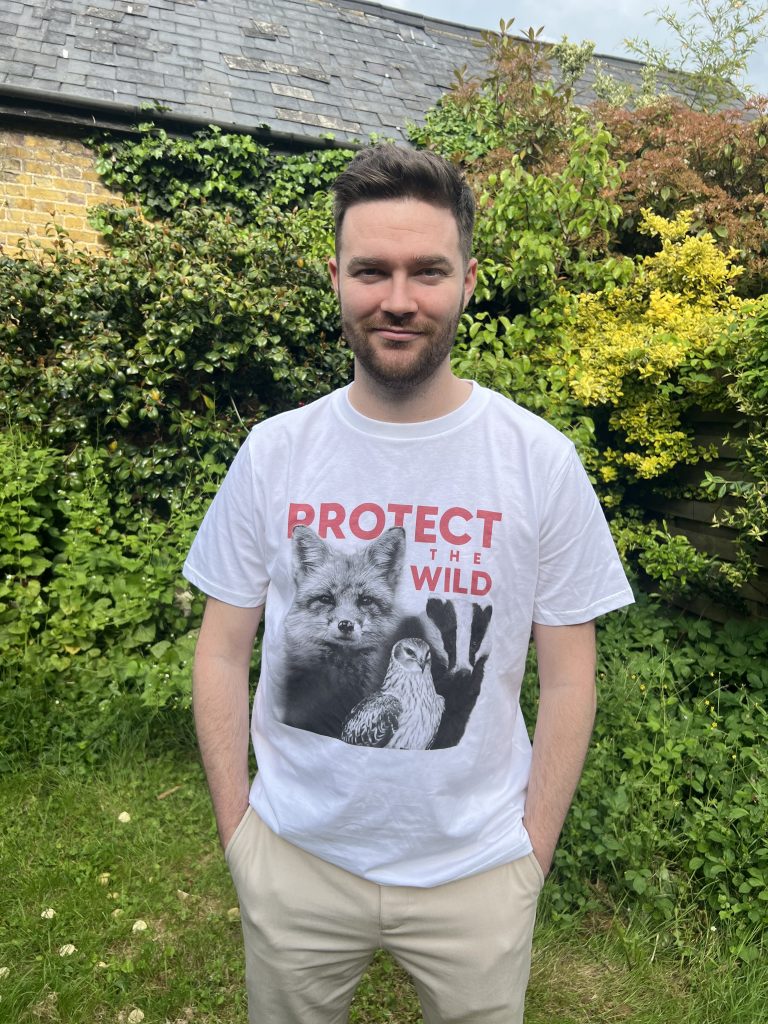
Rob Pownall began campaigning for British wildlife aged just 16 when he launched a successful campaign – Keep the Ban – against the relegalisation of fox-hunting, something the government of the time were considering. Now in his twenties, the organisation he founded, Protect the Wild, is active on multiple fronts to end hunting, end shooting and stop the badger cull.
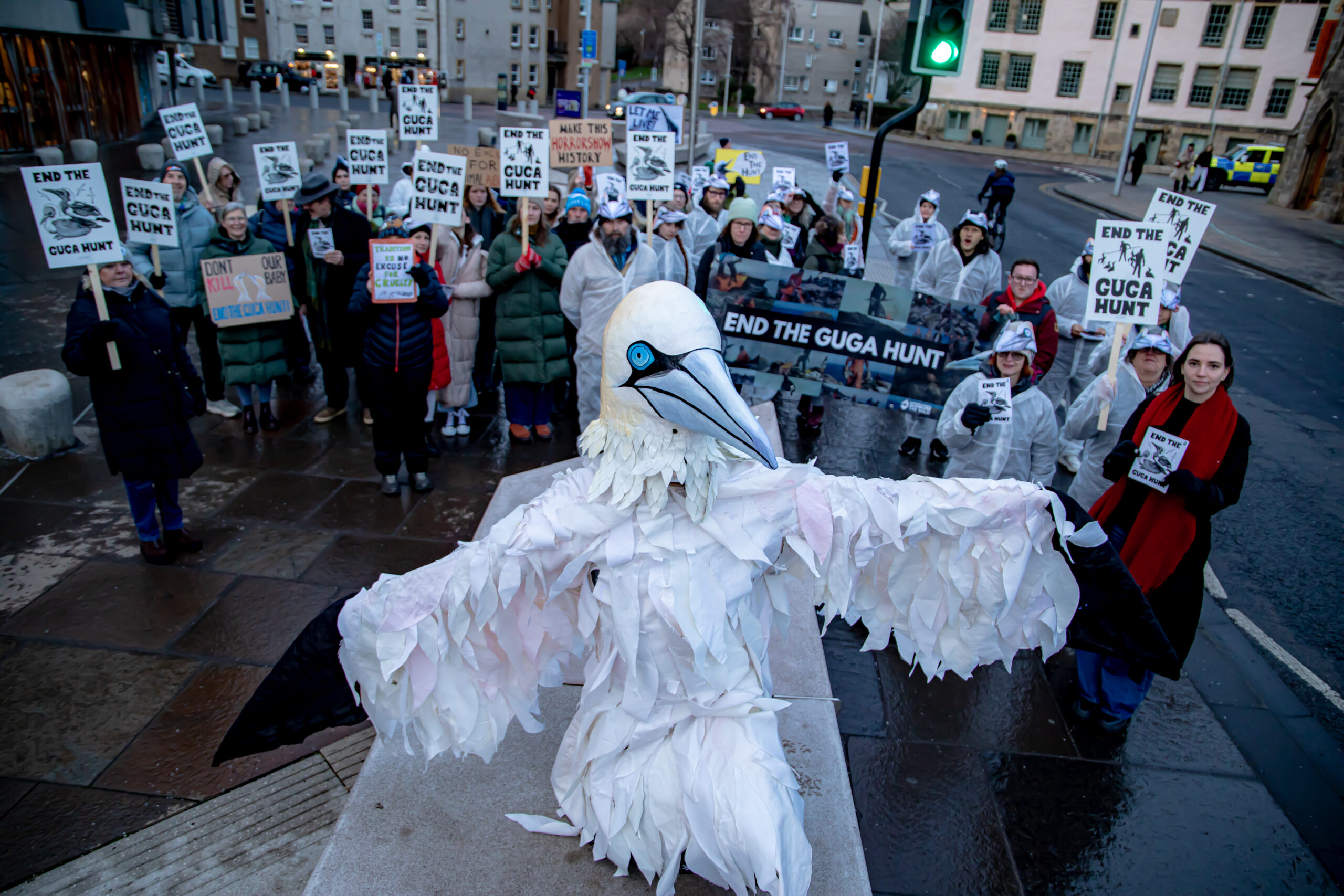
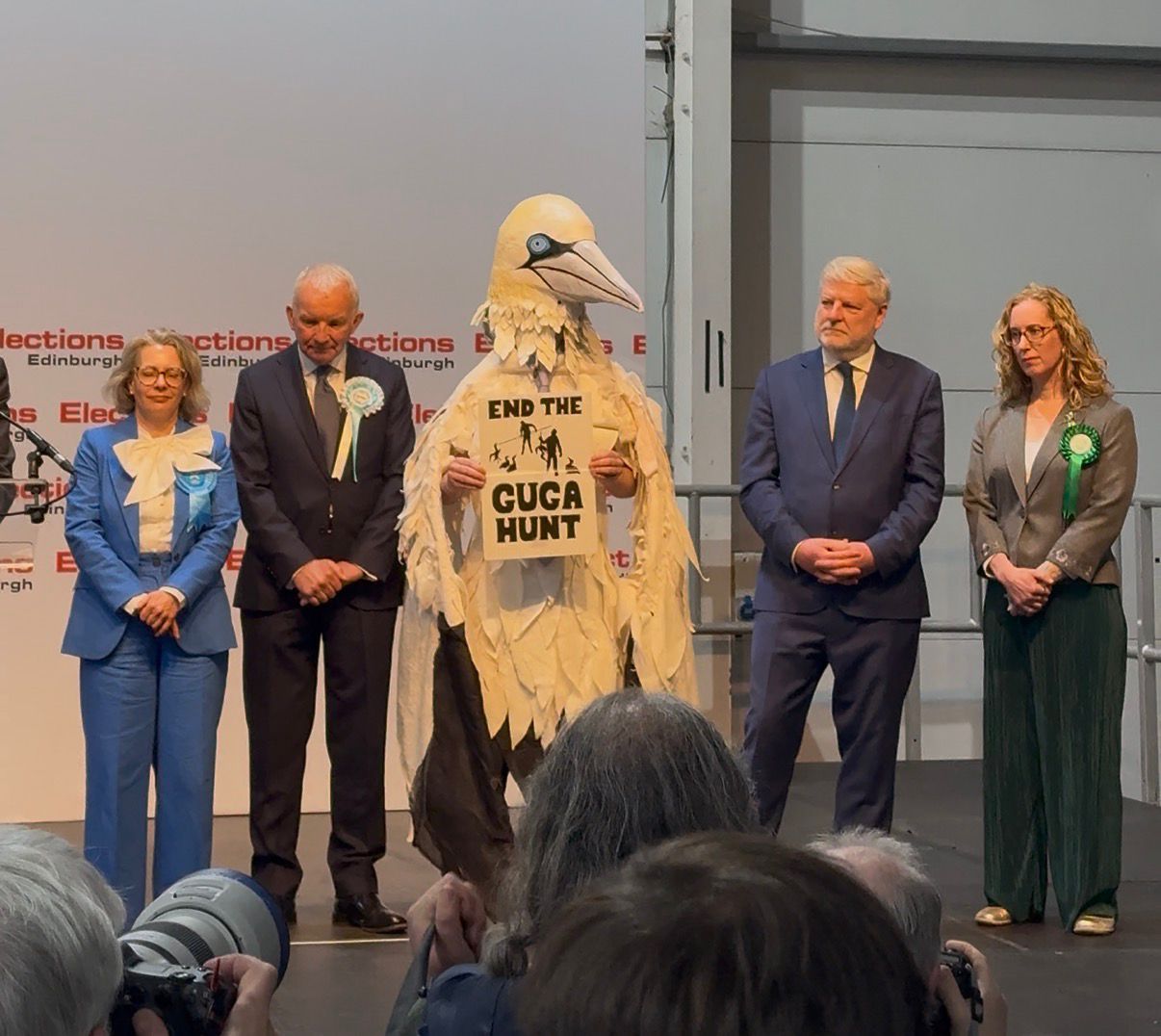
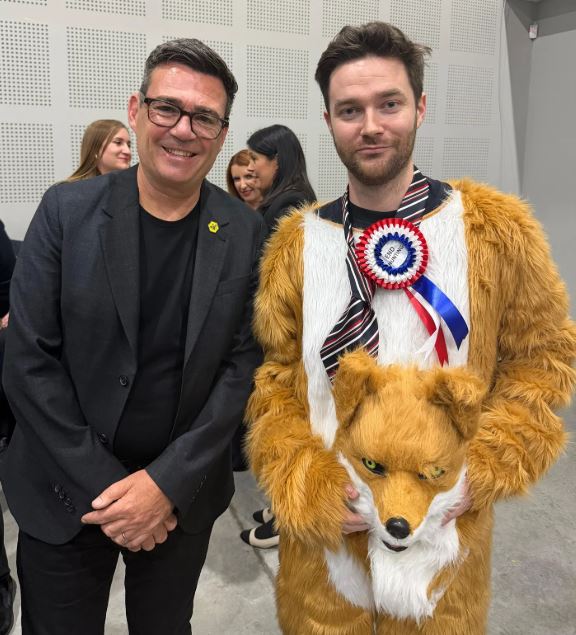
The organisation has also been campaigning hard to stop the barbaric killing of young Gannet chicks in Scotland – the Guga Hunt – and supporting many other local campaigns. Rob stood as a candidate in two recent by-elections; in Scotland dressed as a Gannet, and in Makerfield alongside Andy Burnham, dressed as a Fox.
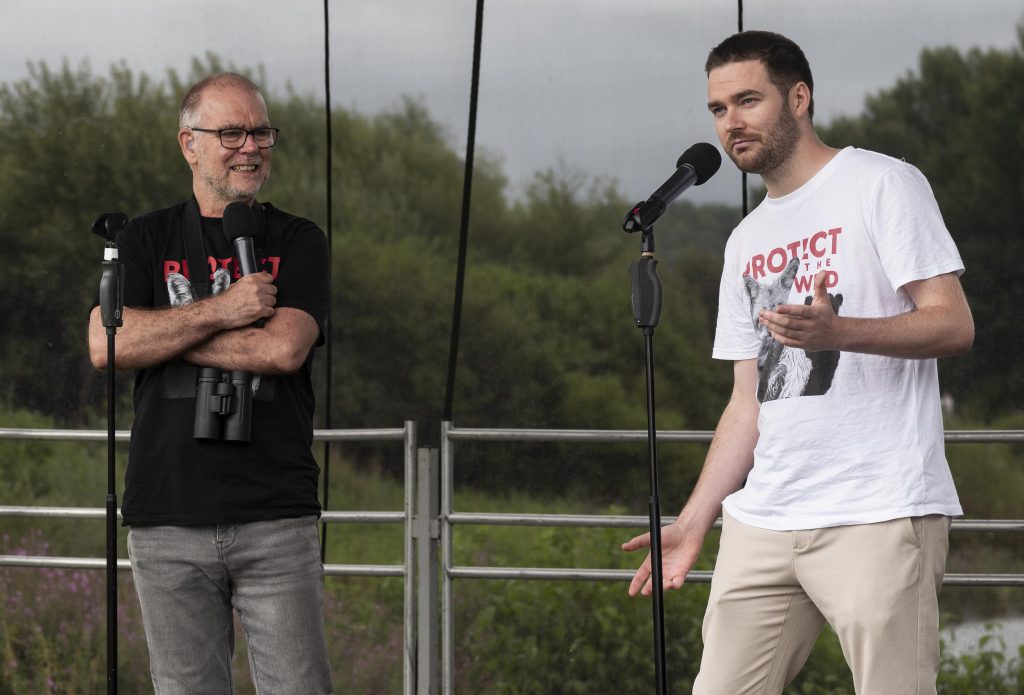
We were delighted to have Rob and colleague Charlie speak at our 2024 Action for Wildlife Day event, and we recently caught up with him again for an update.
"We will do everything within our power to protect British wildlife and challenge those who seek to exploit it"
Q. We last met you at the Action for Wildlife Day at Carsington Water, back in 2024, when Protect the Wild were a key sponsor, and you and colleague Charlie gave an impassioned speech on the main platform. Looking back, how did you feel about that event?
Looking back on Action for Wildlife Day 2024, I do so with very fond memories. It was a genuinely important event for Protect the Wild and for me personally. Opportunities to meet supporters face-to-face are incredibly valuable, and being able to speak with so many passionate people who care deeply about wildlife was both inspiring and energising.
The event felt like a real milestone for us as an organisation. Standing alongside Charlie and speaking from the main stage gave us the chance to reaffirm what I see as a kind of social contract with our supporters: that we will do everything within our power to protect British wildlife and challenge those who seek to exploit it. Being able to make that commitment publicly, in front of so many people who share those values, was incredibly meaningful.
The reality of campaigning can often feel isolating. Much of the work happens behind screens, in meetings, or dealing with difficult and often depressing issues. Events like Action for Wildlife Day are an important reminder that there is a huge community of people who care deeply about animals and wildlife and who are willing to stand up for them. I always come away from those gatherings with a renewed sense of purpose and motivation, and 2024 was no exception.
"I am so proud of our output and what we stand for and we will not be slowing down anytime soon"
Q. Protect the Wild have been incredibly active campaigning for wildlife on several fronts since then. What kinds of things have you and your team been doing?
We’ve been very very busy the last two years! We’ve continued to push hard for action to be taken on hunting and finally seen some progress with the Government having recently conducted a public consultation on the issue of trail hunting. Of course we still have fears it won’t go far enough but this is a real sign of progress nevertheless.
We’ve just finished what we believe to be the largest undercover investigation ever undertaken into the British bird shooting industry with the findings being released as we speak. We’ve seen major breakthroughs on issues like the Guga Hunt with our campaign pushing the issue in front of millions of people.
Our animations have continued to flourish, with tens of millions being exposed to everything from glue traps and snares to the badger cull and freeing penguins from London SeaLife. We’ve helped call off pigeon culls, bring down bird netting, and even free a macaw from a restaurant in Manchester!
And we continue to do everything we can to stand up for British wildlife. From hosting events for MPs, writing ground-breaking reports, cutting through online with a huge volume of content and daily articles pushing issues in front of as many people as possible. I am so proud of our output and what we stand for and we will not be slowing down anytime soon.
"Conservation and animal protection campaigns often face an uphill battle for attention, and attention is a valuable currency"
Q. Standing in by-elections, first in Scotland dressed as a Gannet, and now in Makerfield as a Fox, has frequently made the national news headlines, and it has been a key campaigning tactic for you. It must have involved a huge amount of work. How did this evolve, and what have you learned from this?
I must confess that I can’t take full credit for the idea. I actually stole it from an anti-salmon farming campaigner in Scotland who joked about standing for the Scottish Parliament dressed as a salmon. I immediately turned to my colleague and said, “Hang on, we’ve already got a brilliant gannet costume, and it only costs £500 to stand as a candidate.” Within a week, I was filling out the paperwork.
It was definitely a leap into the unknown. Our thinking was that the combination of a striking costume, a controversial but relatively little-known issue, and the fact that the media has a duty to acknowledge election candidates might create an opportunity to reach people we would otherwise never be able to reach. Journalists are always on the lookout for unusual election stories, and fortunately the idea paid off far better than we could have hoped.
What it taught us is the importance of being willing to experiment. Conservation and animal protection campaigns often face an uphill battle for attention, and attention is a valuable currency. We simply can’t afford to sit back and hope people will discover these issues on their own. In the case of the Guga hunt, for example, the biggest obstacle was not necessarily public opposition. It was that most people had never even heard of it.
A month later, I repeated the approach in the Makerfield by-election, this time dressed as a fox. Admittedly, the media had plenty of other stories competing for attention, but it still proved worthwhile.
I was able to have a two-minute conversation with the future Prime Minister and press him directly on what he intended to do for British wildlife. And while we didn’t win the election, seeing “Protect British Wildlife” appear in countless photographs from the count was a reminder that creative campaigning can put wildlife issues in places they otherwise would not be.
Ultimately, the lesson has been simple. If you want people to talk about wildlife, sometimes you have to be prepared to do things differently. Whether that’s standing in an election dressed as a gannet or a fox, the goal is always the same: to get issues affecting animals and wildlife into the public conversation.
Q. We can see that your by-election activity has not prevented Protect the Wild from continuing to campaign on many other issues, both big and small, from trail hunting and badger culls to swift nest blocking and newt habitat destruction. You must have an exceptional team working with you. How do you maintain momentum on so many threats to British wildlife?
Protect the Wild has a brilliant team of campaigners who simply really, really care about winning for British wildlife. I won’t lie, it’s not easy juggling so many things simultaneously. And it’s even harder when we have to make tough decisions around what campaigns we decide to take on and which we simply don’t have the ability to help with. I wish we could be doing even more, that is the one thing that fuels the relentless pursuit of growth for Protect the Wild. I have personally become entirely consumed by the work and this of course brings benefits but in recent times I acknowledge more balance is needed if we are to be sustainable long-term. In short, we all work really hard and all of the little victories keep us motivated and inspired to keep going harder.
"From the routine persecution of birds of prey to the widespread killing of mammals and other species deemed inconvenient to shooting interests, the collateral damage is staggering and demands far greater scrutiny and action"
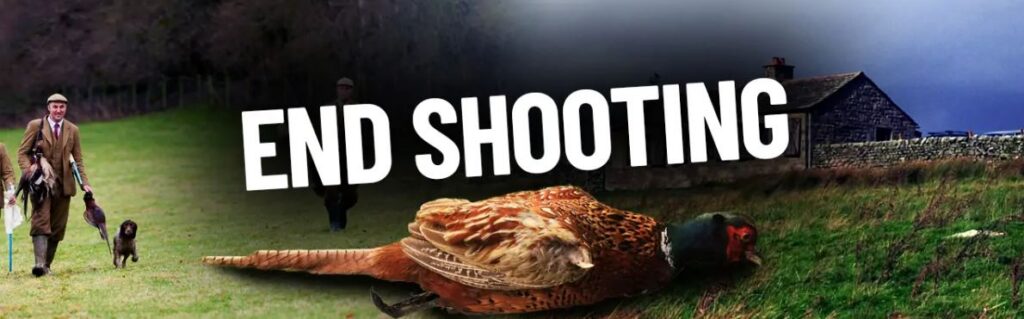
Q. Your new End Bird Shooting campaign strongly resonates with Hen Harrier Action supporters – we have the same goal. What prompted you to begin the campaign and how is it going so far?
There were several reasons why we decided to launch the End Bird Shooting campaign. For one, my colleague Charlie Moores has been sounding the alarm about the shooting industry for many years. In fact, helping us take on this issue was one of the reasons he joined the Protect the Wild team in the first place.
If I’m honest, I’m frustrated that we weren’t able to start the campaign sooner. As a relatively small organisation, much of our work and resources have historically been focused on ending hunting with hounds. We simply didn’t have the capacity to take on another industry of this scale until more recently. That said, I always knew bird shooting was an issue that needed exposing and challenging. So when the opportunity arose to work with a team of exceptional investigators and gain unprecedented access to the heart of the industry, it felt the right moment to act.
There was also a strategic element to the decision. We felt that the public debate around hunting had fundamentally shifted. Thanks to the tireless efforts of hunt saboteurs, monitors and countless organisations over many years, the myth of “trail hunting” has been comprehensively exposed. While the fight is far from over, it was clear that more attention needed to be directed towards another major threat to animals and wildlife.
As an organisation that claims to do everything it can to protect British wildlife, we felt a responsibility to bring the same energy, determination and focus to ending bird shooting. While many of the birds bred and released by the industry are non-native species, that does nothing to diminish the immense suffering inflicted upon them. Nor does it lessen the devastating impact the industry has on native wildlife. From the routine persecution of birds of prey to the widespread killing of mammals and other species deemed inconvenient to shooting interests, the collateral damage is staggering and demands far greater scrutiny and action.
So far, the response has been incredibly encouraging. The public reaction to our investigations and campaigning has shown that once people are confronted with the reality of the industry, many are shocked by what they discover. We know there is a long road ahead, but the campaign is already helping to start conversations that the shooting industry would much rather avoid and that’s exactly where meaningful change begins.
Q. What future plans do you have for the End Bird Shooting campaign? I know that you have recently highlighted some gruelling covert footage from a game bird farm – is there more to come?
The first focus of the End Bird Shooting campaign is education. Before we can achieve meaningful legislative or societal change, people need to understand the reality of what happens within the shooting industry and the suffering it inflicts on millions of birds every year. Without that awareness and the public outrage that should accompany it there is little prospect of bringing the industry to an end.
We make no secret of the fact that the next year is about building a movement above all else. Our priority is to get the truth in front of as many people as possible, creating content that cuts through the noise and exposes an industry that has operated largely out of sight and out of mind for far too long.
Recent polling highlights the scale of the challenge ahead. Only around one in four people know that the shooting industry relies on factory-farmed birds. Yet, crucially, a majority said they would be more likely to support making bird shooting illegal if they were aware of this fact. That tells us there is enormous potential for change once people are informed.
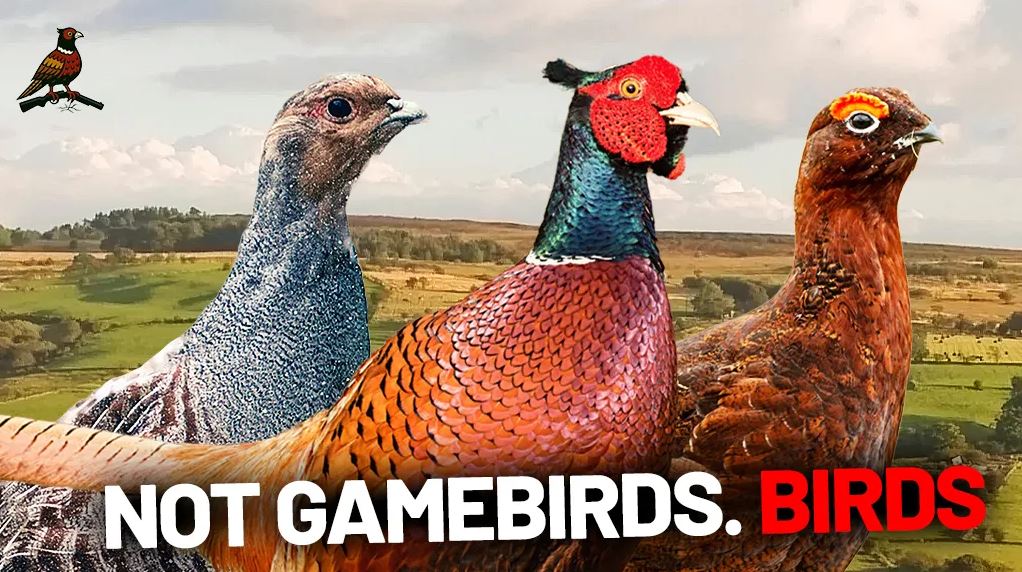
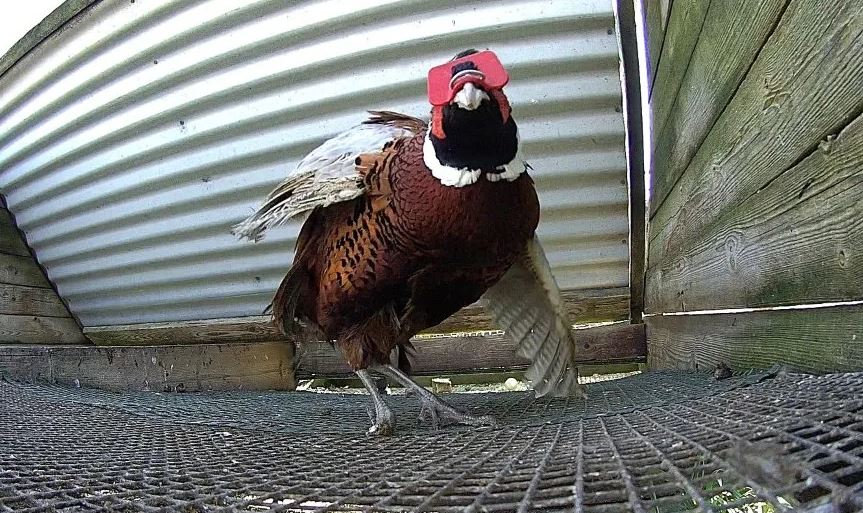
While the task ahead is significant, it’s one we’re fully prepared to take on. I firmly believe that once the public understands the reality of this industry, we can make real progress towards ending it. And there is much more to come. The footage we’ve recently released from one of Britain’s biggest ‘game’ bird farms is only the beginning. Over the coming months, we’ll continue exposing the industry from every possible angle, revealing evidence that demonstrates not only the cruelty at its core but also why bird shooting has no place in a modern society. Fortunately, we’re not short of either arguments or evidence.
"A few years ago, I had no idea that tens of millions of birds were being bred in factory-farm conditions across the British countryside simply to be shot for sport"
Q. I know that many of your supporters are passionately concerned about foxhunting – are they just as concerned about gamebird shooting, or are you attracting new supporters?
It’s our job to make our supporters as concerned about bird shooting as they are about fox hunting. That isn’t necessarily an easy task. Charismatic mammals naturally attract more public empathy, which is one of the reasons we’ve been able to build such a large and engaged audience around what was, for many years, a single-issue campaign to end hunting with hounds.
But concern is often a product of awareness. The more people learn about an issue and the more they are exposed to it, the harder it becomes to ignore. A few years ago, I had no idea that tens of millions of birds were being bred in factory-farm conditions across the British countryside simply to be shot for sport. Once you discover that reality, it’s difficult not to want to do everything possible to stop it.
Our challenge now is to bring that same level of awareness to the wider public. We want existing supporters to understand the scale of the cruelty involved, while also reaching entirely new audiences who may never have considered the issue before. Ultimately, our success will depend on people seeing the evidence for themselves and feeling the same sense of outrage and determination that we do. If we can achieve that, I believe we’ll build a movement that is just as passionate about ending bird shooting as it has been about ending fox hunting.
"My hope for British wildlife is simple: that we live under a government that recognises animals are not an afterthought and can no longer be treated as expendable"
Q. Looking ahead for Protect the Wild, what plans do you and your team over the next 12 months? What are your hopes for British wildlife?
Over the next 12 months, our goal is to remain a loud, defiant and unapologetic voice for animals. That means continuing to challenge the abuse and exploitation of British wildlife wherever it occurs, always through an anti-speciesist lens.
One of our biggest priorities is our campaign to end bird shooting. Recently launched, the campaign will gather momentum in the months ahead as we release findings from what we believe is the largest undercover investigation ever conducted into the industry. With this work, we hope to build a visible, growing movement of people united by the belief that bird shooting should be both illegal and socially unacceptable.
We are also expanding our campaigning into other areas, including challenging the widespread use of rodenticides and scrutinising a pest control industry that has largely escaped public attention and accountability.
Alongside this, we will continue to hold the Government to account, ensuring the badger cull is never reintroduced and pushing for meaningful action to tackle hunting to ensure they don’t mess it up in the same way they did twenty years ago. Beyond these major campaigns, we will keep fighting for every possible win for British wildlife – whether that’s stopping wildlife culls, persuading companies to remove harmful bird netting, or bringing an end to practices such as the Guga hunt.
Further afield, we are also working to establish a dedicated team in Scotland, allowing Protect the Wild Scotland to grow into a strong and independent force for wildlife protection in its own right.
Longer term, my hope for British wildlife is simple: that we live under a government that recognises animals are not an afterthought and can no longer be treated as expendable. Until then, we’ll continue pushing for a future in which wildlife is valued, protected and allowed to thrive.
We are immensely grateful to Rob and his team at Protect the Wild for their tireless campaigning on behalf of British wildlife. Their new campaign to End Bird Shooting is very much in tune with our own objectives as a charity.
Hen Harrier Action has donated £1,000 from our charitable funds to support their work to End Bird Shooting.